
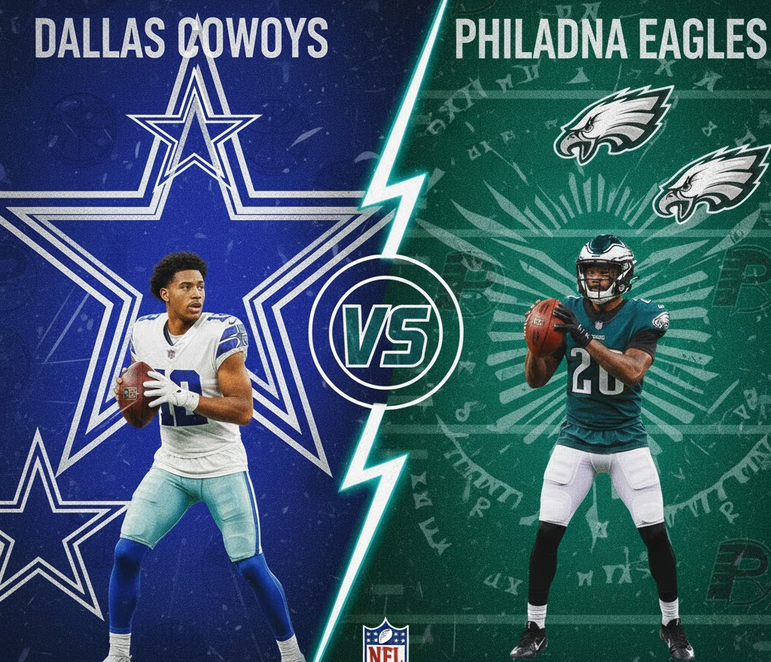
The rivalry between the Dallas Cowboys and the Philadelphia Eagles is one of the most historic and fiercely competitive matchups in the National Football League (NFL). Every time these two NFC East powerhouses collide, fans expect intensity, elite talent, and game-changing performances. The Dallas Cowboys vs Philadelphia Eagles match player stats provide a clear window into how and why each game unfolds the way it does. Player statistics go beyond numbers; they reveal execution, preparation, and adaptability under pressure. This article delivers a comprehensive, SEO-optimized, and reader-friendly breakdown of the latest marquee clash, focusing on offensive output, defensive dominance, and individual brilliance that shaped the outcome.
Historical Significance of the Cowboys vs Eagles Rivalry
The Cowboys–Eagles rivalry spans decades and has played a major role in shaping the NFC East hierarchy. With both teams consistently competing for playoff spots, each matchup carries postseason implications. Over the years, legendary players like Troy Aikman, Emmitt Smith, Donovan McNabb, and Brian Dawkins have contributed to unforgettable moments. In modern matchups, the Dallas Cowboys vs Philadelphia Eagles match player stats reflect how the rivalry has evolved into a battle of high-powered offenses and aggressive defenses. Every statistical comparison is viewed through the lens of history, making each game more than just a regular-season contest.
Game Setting and Match Context
The most recent high-profile meeting took place during the 2023 NFL regular season, drawing national attention due to playoff implications. Hosted at AT&T Stadium, the game featured two teams with Super Bowl aspirations. Dallas entered the matchup with strong home momentum, while Philadelphia aimed to reassert divisional dominance. From kickoff, intensity was evident in every snap. The Dallas Cowboys vs Philadelphia Eagles match player stats illustrate how preparation and home-field advantage played critical roles. Weather conditions, crowd noise, and situational play-calling all influenced player performances throughout the contest.
First-Half Statistical Overview
The first half established the foundation for the final result. Dallas built an early lead through efficient drives and disciplined execution. By halftime, the Cowboys had accumulated over 250 total yards, while limiting Philadelphia’s offensive rhythm. The Dallas Cowboys vs Philadelphia Eagles match player stats from the first half highlight Dallas’ superior third-down efficiency and red-zone execution. Philadelphia, despite flashes of brilliance, struggled to maintain consistency. Missed opportunities and stalled drives prevented the Eagles from keeping pace, forcing them into a pass-heavy approach earlier than planned.
Dak Prescott’s Commanding Quarterback Play
Dak Prescott delivered a calm, controlled, and highly effective performance. He finished the game with over 270 passing yards, completing a high percentage of his attempts while avoiding turnovers. Prescott’s ability to read defensive coverages and adjust protections at the line of scrimmage stood out. In the Dallas Cowboys vs Philadelphia Eagles match player stats, Prescott’s passer rating and yards per attempt reflected elite efficiency. His leadership allowed Dallas to sustain long drives, keep their defense rested, and dictate the tempo. This performance reinforced Prescott’s status as one of the NFL’s most reliable quarterbacks.
Jalen Hurts’ Statistical Output and Challenges
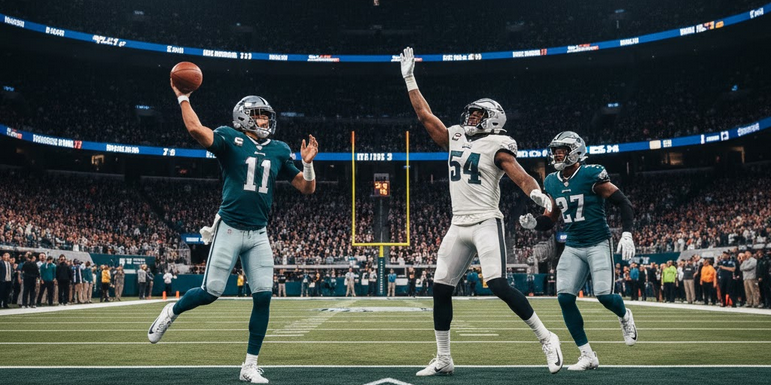
Jalen Hurts, known for his dual-threat ability, faced a disciplined and aggressive Dallas defense. He recorded nearly 200 passing yards and added a passing touchdown, but his rushing impact was limited. The Dallas Cowboys vs Philadelphia Eagles match player stats show that Dallas successfully contained Hurts’ scrambling lanes, forcing him to remain in the pocket. Pressure from the edge disrupted timing routes and reduced explosive plays. While Hurts demonstrated resilience and leadership, the lack of sustained offensive rhythm hindered Philadelphia’s scoring potential.
Running Back Comparison and Rushing Efficiency
The rushing battle significantly influenced game control. Dallas leaned on a balanced ground attack that consistently gained positive yardage. Tony Pollard led the Cowboys’ rushing effort, supported by situational runs that kept the Eagles’ defense honest. Philadelphia’s rushing attack, usually a strength, was largely neutralized. The Dallas Cowboys vs Philadelphia Eagles match player stats reveal that Dallas won the battle at the line of scrimmage, limiting yards after contact. This forced the Eagles to rely heavily on passing, reducing offensive balance and predictability.
Tony Pollard’s All-Around Contribution
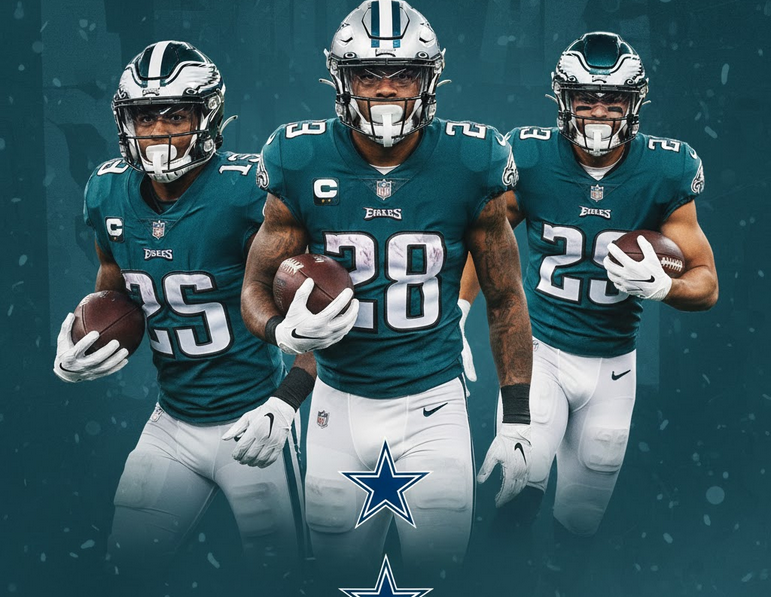
Tony Pollard showcased his versatility as both a runner and receiver. Although his rushing yardage was modest, his efficiency and situational awareness made a significant impact. Pollard’s ability to convert short-yardage situations and contribute in pass protection added value beyond the stat sheet. In the Dallas Cowboys vs Philadelphia Eagles match player stats, Pollard’s presence helped Dallas maintain offensive balance. His quick acceleration and vision stretched the defense horizontally, opening opportunities for play-action passes and intermediate routes.
Wide Receiver Matchups and Production
The wide receiver battle heavily favored Dallas, led by a dominant performance from CeeDee Lamb. Lamb recorded over 190 receiving yards, consistently creating separation and gaining yards after the catch. His chemistry with Prescott was evident throughout the game. The Dallas Cowboys vs Philadelphia Eagles match player stats emphasize Lamb’s role as the primary offensive catalyst. Philadelphia’s receivers, while talented, faced tighter coverage and fewer opportunities for explosive plays. Dallas’ defensive schemes limited downfield throws and contested catches effectively.
CeeDee Lamb’s Record-Setting Night
CeeDee Lamb delivered one of the most memorable performances of the rivalry. His route running, body control, and awareness allowed him to exploit defensive mismatches. Lamb accounted for a substantial portion of Dallas’ total offensive output. In the Dallas Cowboys vs Philadelphia Eagles match player stats, Lamb’s yards per reception and total targets underscore his importance. His ability to turn short passes into long gains kept drives alive and demoralized the Eagles’ defense. This performance solidified Lamb’s reputation as an elite NFL wide receiver.
Eagles Receiving Unit Performance Review
Philadelphia’s receiving corps had moments of effectiveness but lacked consistency. A.J. Brown led the team in receptions and yardage, showcasing physicality and strong hands. DeVonta Smith contributed a touchdown but was limited in overall involvement. The Dallas Cowboys vs Philadelphia Eagles match player stats indicate that Dallas’ defensive backs disrupted timing and limited yards after catch. While individual talent was evident, Philadelphia struggled to generate explosive plays, which are critical against high-scoring opponents like Dallas.
Tight End Usage and Impact
Tight ends played supportive but meaningful roles in this matchup. Dallas utilized Jake Ferguson as a reliable target on third downs and in the red zone. His sure hands contributed to sustained drives. Philadelphia welcomed back Dallas Goedert, who added stability but lacked explosive impact. The Dallas Cowboys vs Philadelphia Eagles match player stats show that Dallas’ tight end production translated into scoring efficiency, while Philadelphia’s contributions were more situational and less influential on the scoreboard.
Defensive Dominance: Cowboys’ Front Seven
Dallas’ defense was the defining factor of the game. Led by Micah Parsons, the Cowboys’ front seven consistently pressured Hurts and disrupted offensive timing. Parsons recorded multiple quarterback pressures and forced hurried decisions. The Dallas Cowboys vs Philadelphia Eagles match player stats highlight Dallas’ ability to limit rushing lanes and control the trenches. Linebackers and defensive linemen maintained gap discipline, preventing big plays and forcing long third-down situations. This defensive performance set the tone from start to finish.
Eagles Defensive Struggles and Missed Opportunities
Philadelphia’s defense faced challenges containing Dallas’ balanced offense. Despite strong individual efforts from Haason Reddick, the unit allowed consistent yardage and failed to generate turnovers. Missed tackles and coverage lapses proved costly. The Dallas Cowboys vs Philadelphia Eagles match player stats reflect Dallas’ superior yards per play and time of possession. Philadelphia’s inability to force negative plays limited momentum swings, making it difficult to close the scoring gap.
Turnovers, Penalties, and Discipline Metrics
Discipline played a major role in the outcome. Dallas executed a clean game plan with no turnovers, while Philadelphia committed costly penalties that extended drives. The Dallas Cowboys vs Philadelphia Eagles match player stats emphasize how turnover margin and penalty discipline directly impacted field position. Dallas’ ability to avoid mistakes allowed them to capitalize on scoring opportunities, while Philadelphia’s miscues stalled potential comebacks.
Special Teams and Field Position Battle
Special teams quietly influenced the flow of the game. Brandon Aubrey remained reliable, converting all field goal attempts. Dallas also benefited from consistent kickoff coverage, limiting return yardage. The Dallas Cowboys vs Philadelphia Eagles match player stats show Dallas starting drives with favorable field position more often than Philadelphia. While the Eagles’ special teams were steady, they lacked a game-changing play that could have shifted momentum.
Coaching Strategies and Game Management
Coaching decisions played a pivotal role in Dallas’ success. Mike McCarthy implemented a balanced offensive approach that exploited Philadelphia’s defensive tendencies. Defensive coordinator adjustments limited Hurts’ mobility and passing lanes. The Dallas Cowboys vs Philadelphia Eagles match player stats reflect effective play-calling on third downs and in the red zone. Philadelphia’s coaching staff struggled to counter these adjustments, resulting in stalled drives and limited scoring opportunities.
Advanced Metrics and Analytical Insights
Advanced analytics further underscore Dallas’ dominance. Metrics such as third-down conversion rate, yards per play, and red-zone efficiency favored the Cowboys. The Dallas Cowboys vs Philadelphia Eagles match player stats from an analytical perspective highlight consistent efficiency rather than reliance on isolated big plays. Dallas controlled pace and tempo, minimizing defensive fatigue and maximizing scoring potential through sustained drives.
Media Analysis and Fan Reactions
Post-game analysis from media outlets praised Dallas’ comprehensive performance. Fans celebrated the dominance, particularly the standout efforts from Prescott and Lamb. The Dallas Cowboys vs Philadelphia Eagles match player stats became a central topic in discussions about playoff readiness. Analysts pointed to Dallas’ balance and discipline as indicators of postseason success, while Philadelphia faced scrutiny regarding defensive consistency and adaptability.
Season Impact and Playoff Implications
This matchup had significant implications for both teams’ seasons. Dallas gained momentum and confidence heading into the latter part of the schedule. Philadelphia, while still competitive, faced pressure to address defensive vulnerabilities. The Dallas Cowboys vs Philadelphia Eagles match player stats served as a benchmark for evaluating playoff potential. For Dallas, the game reinforced their identity as a complete team capable of competing with the league’s best.
Conclusion
The Dallas Cowboys vs Philadelphia Eagles match player stats provide a detailed narrative of dominance, execution, and strategic superiority. Dallas excelled across all phases, from quarterback efficiency to defensive pressure and special teams reliability. Standout performances by Dak Prescott, CeeDee Lamb, and Micah Parsons defined the game, while disciplined coaching ensured consistency. For fans, analysts, and fantasy football enthusiasts, this matchup offered valuable insights into team dynamics and postseason readiness. As the rivalry continues, future encounters promise even higher stakes and unforgettable performances.
FAQs
Q1. Who was the most impactful player in the game?
CeeDee Lamb led all players with over 190 receiving yards, making him the standout performer.
Q2. How effective was Dak Prescott?
Prescott threw for over 270 yards, multiple touchdowns, and avoided turnovers.
Q3. Did Jalen Hurts struggle in this matchup?
Hurts performed solidly but was limited by defensive pressure and reduced rushing lanes.
Q4. Which team had better defensive stats?
The Dallas Cowboys’ defense dominated, particularly in quarterback pressure and run containment.
Q5. How important were turnovers in the result?
Dallas committed zero turnovers, while Philadelphia failed to generate takeaways.
Q6. What does this game mean for playoff chances?
The result strengthened Dallas’ playoff positioning and highlighted areas Philadelphia needs to improve.
For More Update and Stories Visit: Zorox