
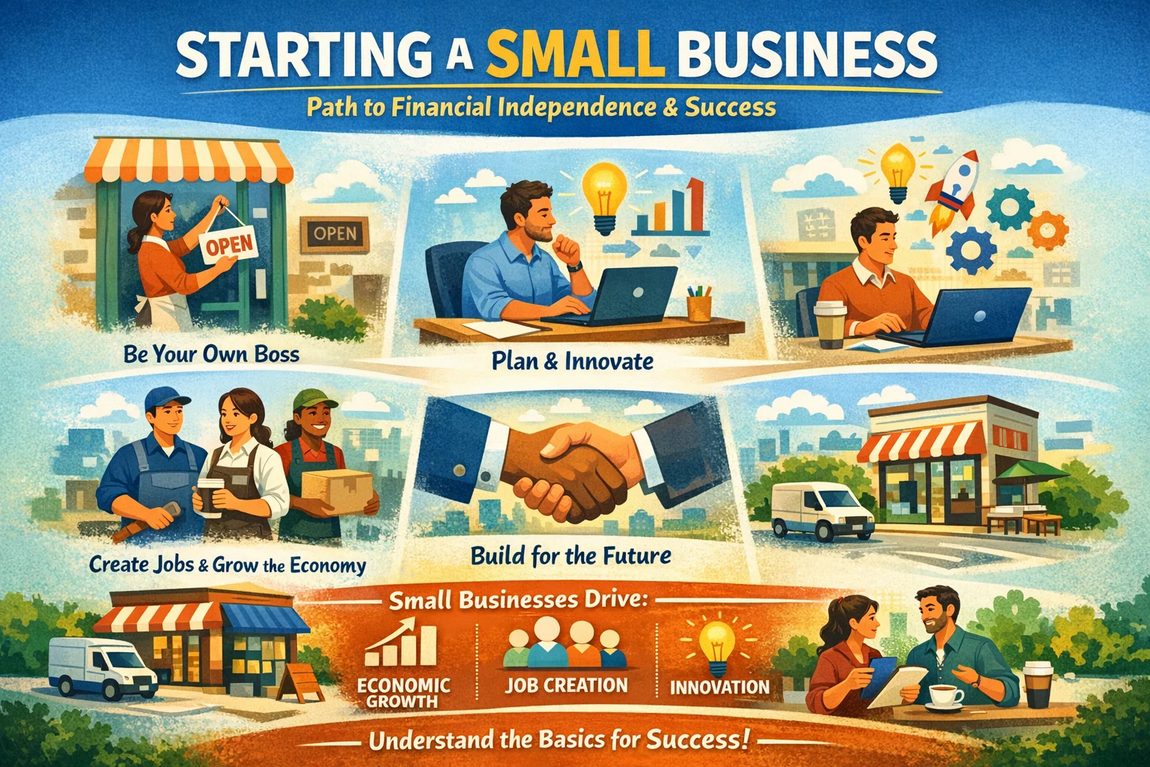
Starting a small business is one of the most effective ways to achieve financial independence and long-term stability. Around the world, small businesses play a vital role in economic growth, job creation, and innovation. Whether you are planning to start a new venture or already running one, understanding the basics is essential for success.
In this guide, we will explain what a small business is, its benefits, common challenges, and practical tips to grow it successfully.
What Is a Small Business?
A small business is typically a privately owned company with a limited number of employees and relatively low startup costs. These businesses can operate online or offline and may include shops, service providers, freelancers, home-based businesses, and digital ventures.
Examples of small businesses include:
- Local retail stores
- Online shops
- Freelancing services
- Blogging and content websites
- Consulting and coaching services
Small businesses are flexible, easy to manage, and often started by individuals or small teams.
Benefits of Starting a Small Business
Starting a small business offers many advantages, especially for beginners.
1. Low Investment
Most small businesses require less capital compared to large companies. Many online small businesses can be started with minimal costs.
2. Independence
You become your own boss and can make decisions according to your goals and vision.
3. Flexibility
A small business allows flexible working hours and better work-life balance.
4. Growth Opportunities
With the right strategy, a small business can grow into a larger brand over time.
Popular Small Business Ideas
If you are looking for inspiration, here are some popular small business ideas:
- Blogging and affiliate marketing
- Freelancing (writing, design, programming)
- E-commerce and dropshipping
- Digital marketing services
- Online tutoring or coaching
- Local service businesses
Choosing the right idea depends on your skills, budget, and interest.
Common Challenges in Small Business
Running a small business is rewarding, but it also comes with challenges.
1. Limited Budget
Many small businesses struggle with limited financial resources in the beginning.
2. Time Management
Handling multiple tasks alone can be stressful without proper planning.
3. Competition
Small businesses often face strong competition from established brands.
4. Marketing Issues
Reaching the right audience without spending too much money can be difficult.
Tips to Grow a Small Business Successfully
Here are some practical tips to help your small business grow:
Focus on Customer Value
Always prioritize customer needs and provide quality products or services.
Build an Online Presence
Create a website and use social media platforms to reach more people.
Manage Finances Wisely
Track your expenses, manage cash flow, and avoid unnecessary costs.
Learn Continuously
Stay updated with industry trends and keep improving your skills.
Be Consistent
Consistency in effort, content, and customer service is key to long-term success.
Importance of Small Business in the Economy
Small businesses are the backbone of many economies. They create employment opportunities, support local communities, and encourage innovation. Governments and organizations often provide support programs to help small businesses grow and succeed.
Final Thoughts
A small business can be a powerful way to achieve independence and financial growth if managed properly. While challenges are part of the journey, smart planning, continuous learning, and dedication can lead to long-term success.
If you are serious about building a small business, start small, stay focused, and grow step by step. With patience and effort, success is achievable.